You’ve been sold it at least once: a copy of you, somewhere, that remembers everything you forget, answers on your behalf and knows you better than you know yourself. It goes by digital double, digital twin, second brain, clone. It’s the same promise, and it’s eighty years old.
This article traces where it comes from, what it actually delivered, and where the technology stands today. Full disclosure: we build MemoryPilot, which is a memory and not a double. That difference is the whole point.
The dream has a birth date: July 1945
Three weeks before Hiroshima, Vannevar Bush publishes an essay in The Atlantic called “As We May Think”. He is running America’s scientific research effort at the time, and he asks a question that hasn’t aged a day: human knowledge is piling up faster than we can find our way back to it, so what’s the point of producing it?
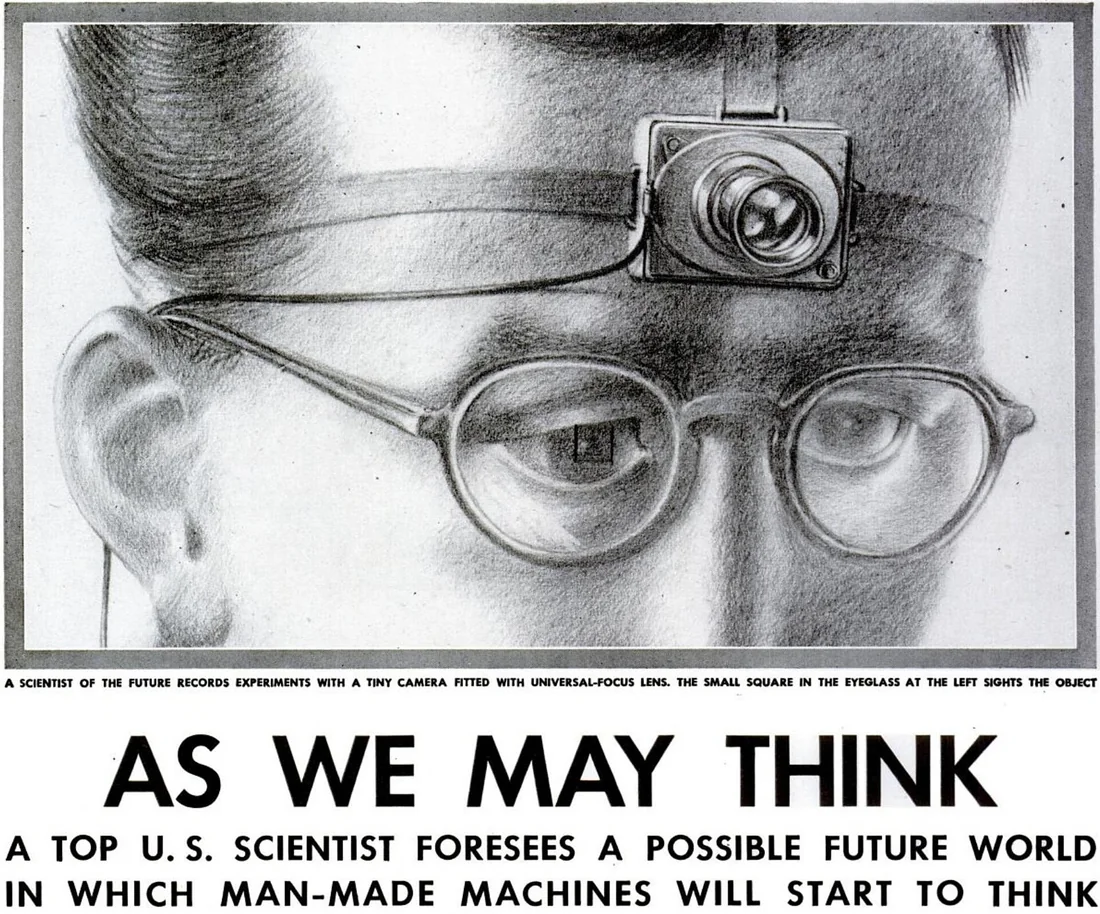
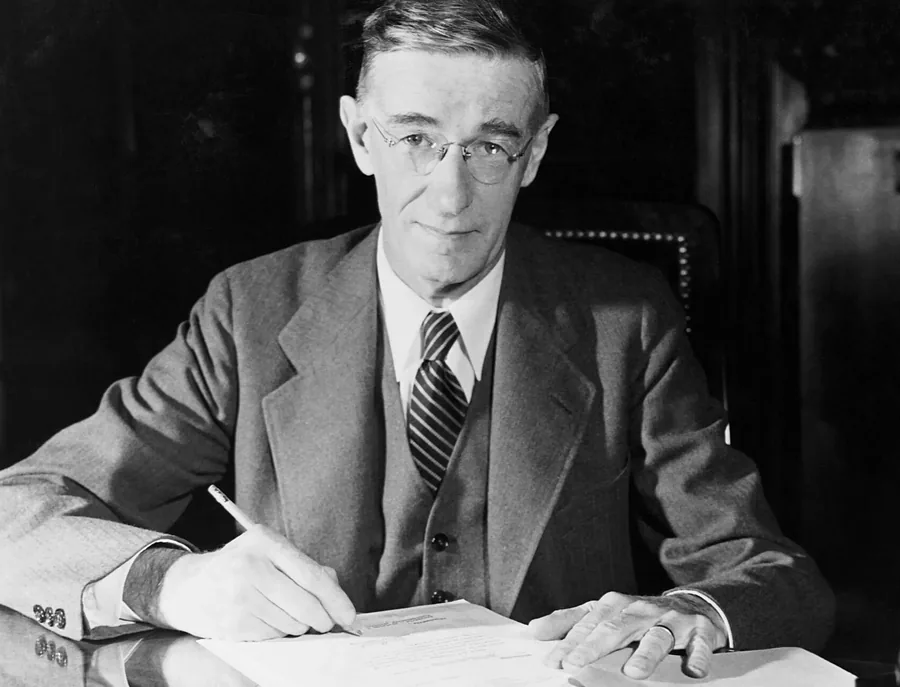
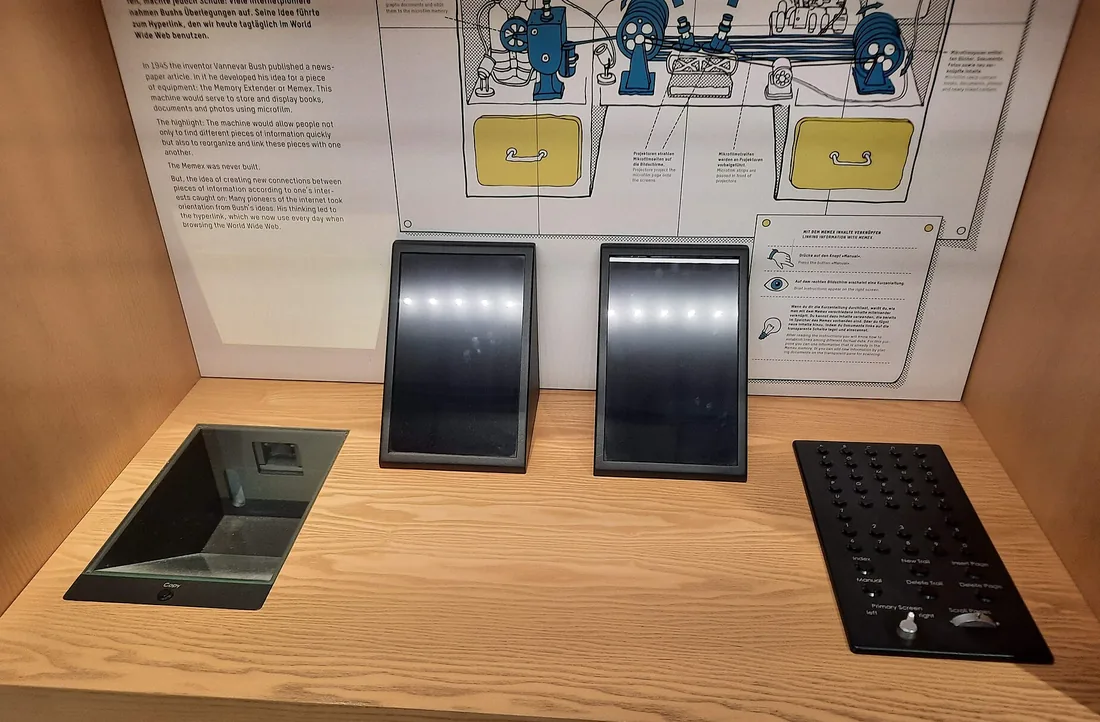
His answer is a machine, the memex: a microfilm desk where you store everything you read and, above all, link documents together along trails you can follow later. Bush writes that human memory works by association, and that alphabetical filing is alien to it. Without naming any of them, he invents hypertext, the bookmark and personal search.
The human mind does not work that way. It operates by association. […] The process of tying two items together is the important thing.Vannevar Bush, “As We May Think,” The Atlantic, July 1945
The memex was never built. But the whole lineage descends from it: Douglas Engelbart cites it in 1962, before inventing the mouse and giving, in 1968, the demo that contains pretty much everything you use today. Ted Nelson draws the word “hypertext” from it. The web is its great-grandchild, a poorer one: it links documents to each other, not your things to your things.
The term “digital twin” comes from somewhere else, and much later
The term has industrial roots, not computing ones. It was born in aerospace, where engineers keep a faithful replica of a vehicle in flight on the ground, fed by its data, to understand what’s happening up there without being able to go and look.
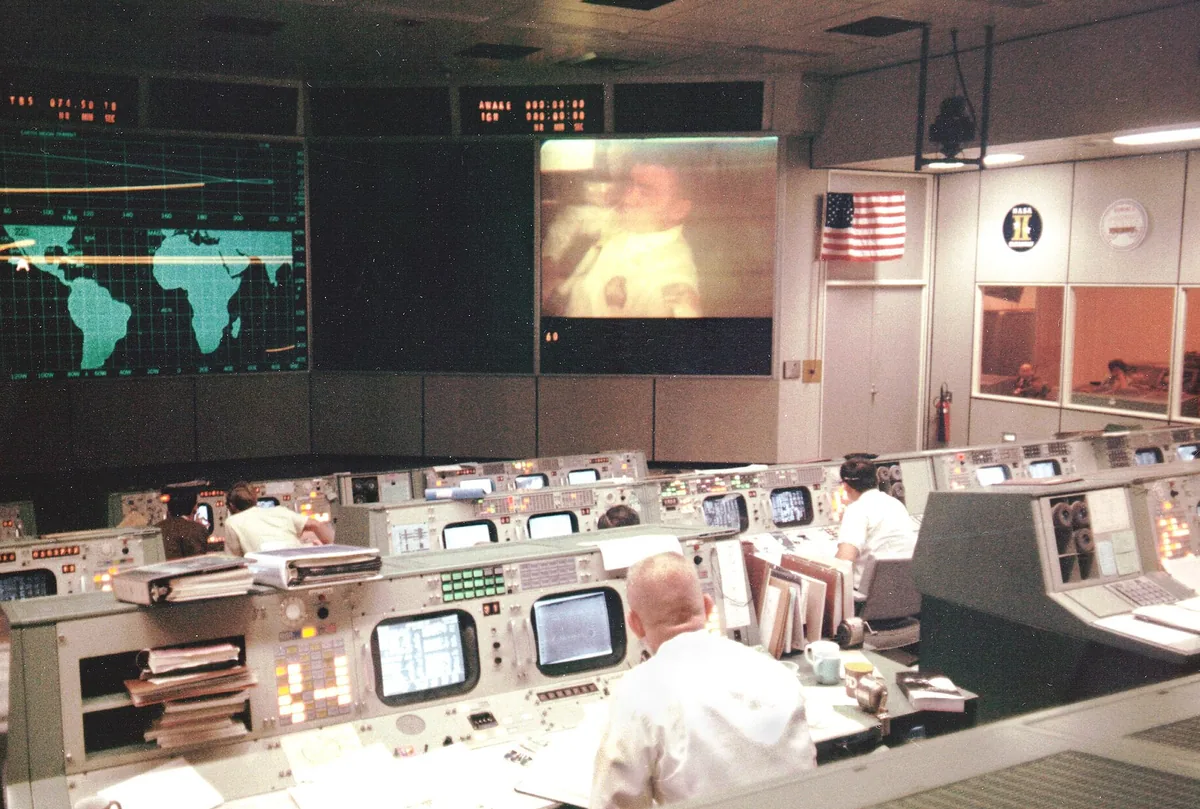
The concept was formulated in 2002 by Michael Grieves at the University of Michigan, under a different name. NASA is what made the expression popular, notably in a 2012 paper titled “The Digital Twin Paradigm for Future NASA and U.S. Air Force Vehicles”. It’s about planes and rockets: a model that continuously receives measurements from the real object and predicts its fatigue.
What the dream promises today
Spend an hour on any social network and you’ll run into the three versions of the promise, in order of ambition:
- The conversational clone. A model trained on your messages, supposed to answer like you. It imitates your style. It doesn’t know what you know.
- The total second brain. Everything you read, write, say and see, captured continuously, with an intelligence on top. The capturing works. The sorting, much less so.
- Consciousness upload. You, but inside a machine. No demonstration, no timeline, no theory that holds up. It’s science fiction, and it has every right to exist as such.
All three share an assumption nobody ever spells out: that remembering everything would be progress. It isn’t, and we’ve known that for a long time.
Reality check #1: keeping everything is useless
Forgetting isn’t a malfunction, it’s a filter. A memory that kept everything would also keep the price of last Tuesday’s coffee and the license plate of the car that passed you this morning. We wrote a whole article about this mechanism: the forgetting curve, measured by Hermann Ebbinghaus in 1885 and replicated, with the same result, in 2015.
The consequence is counterintuitive, and it decides everything: a double that recorded your entire life would be less useful than a notebook, because you’d never find anything in it. The problem has never been storage capacity. It has always been retrieval.
Reality check #2: what works is old and manual
The most famous second brain has nothing digital about it. From 1951 until his death, the sociologist Niklas Luhmann filled a filing cabinet with some ninety thousand index cards, linked to one another by a system of cross-references. He published more than seventy books. The whole collection has since been digitized and can be browsed in the Niklas Luhmann Archiv.
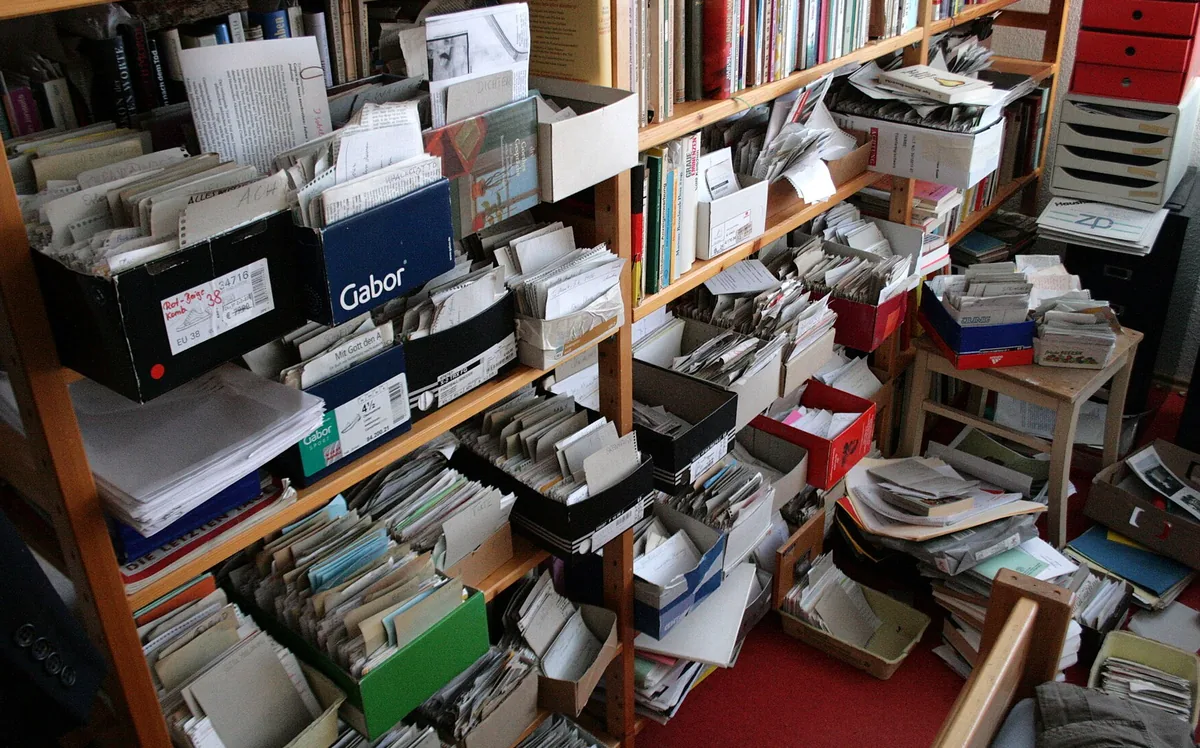
What that cabinet proves is awkward for the dream: the system that worked best captured nothing automatically. It required you to write, to link, to decide. Its strength wasn’t memory, it was the work of making connections, and that work was the point.
The methods that came after it, the digital Zettelkasten, PARA, and the apps built around them, inherit the same strength and the same flaw. They work for people willing to file things. Everyone else drops them after three weeks, and it’s not a lack of discipline: making a decision for every single note ends up costing more than forgetting.
Reality check #3: what AI models can do, and what they can’t
Over the past three years, language models have changed one specific thing, and only one: they understand a sentence no matter how it’s written. That’s huge, because it’s exactly the step every previous system tripped over. You can now write “the gate code is 4512” without picking a folder or making up a title.
What they don’t do can be said just as quickly. They have no memory of their own: what an assistant calls memory is a database made visible to it at the right moment. They make things up when they don’t know. And they don’t know what you haven’t told them, which settles the clone question: a model trained on your writing knows your turns of phrase, not your life.
A model that talks like you isn’t a double. It’s a surface imitation, applied to content it doesn’t have.
What we’re building, and what we refuse to promise
MemoryPilot is a memory, not a double. You hand it what you no longer want to keep in your head, you ask for it later in different words, and it gives it back. It sorts everything on its own into seven families, because that decision is exactly what makes people give up on other systems.
Three choices follow directly from all of the above. Search runs on your phone, in a few milliseconds, offline: finding something sends nothing anywhere. Your entire memory is never sent to a model: a question goes out with six excerpts, whether you have a hundred memories or ten thousand. And sensitive items stay hidden on screen, which isn’t encryption, but it keeps people from reading your screen over your shoulder.
What we don’t promise is shorter, and more important: no clone, no continuous capture, no “double” that thinks for you. We also spell out the limits of what we do, including the ones that don’t flatter us, in our privacy policy and on our about page.
Bush’s memex never existed, and yet he was right about what matters: what’s missing isn’t space, it’s the way back. Eighty years later, the only thing that has truly changed is that you can finally talk to your memory in your own words. It’s modest next to the clone you’re being sold. It’s also the only part that works.
To go further: where to keep your codes and passwords, and the questions people ask us.